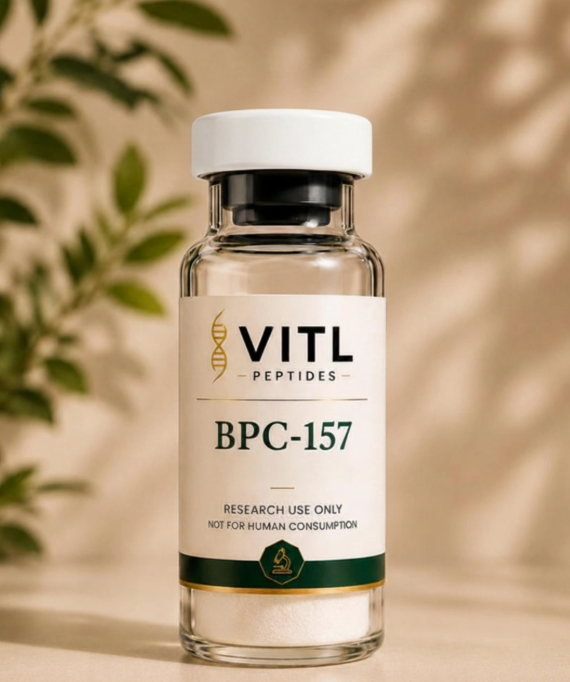
BPC-157 Research Peptide: Examining Cellular Signaling and Biological Pathways
BPC-157 research peptide has attracted scientific interest because of its proposed interactions with cellular processes and biological signaling pathways. Researchers studying experimental peptide compounds often investigate how molecular structures interact with cells, how signaling networks regulate biological functions, and how laboratory conditions influence observed results. Understanding these factors requires careful experimental design, reliable analytical methods, and a clear distinction between preliminary findings and established scientific knowledge.
BPC-157 is a synthetic peptide derived from a sequence associated with a protein found in gastric juice. Although preclinical studies have explored several biological mechanisms associated with this compound, the available evidence remains limited, particularly regarding human applications. Examining its research background offers an opportunity to understand how scientists investigate peptide compounds and evaluate the biological pathways involved in experimental observations.
Understanding the Scientific Background of BPC-157 Research Peptide
Peptide research involves studying short chains of amino acids and their potential interactions with biological systems. Scientists examine molecular characteristics, experimental conditions, and signaling responses to understand how a particular compound behaves in controlled environments. BPC-157 research peptide is frequently discussed in preclinical literature involving cellular processes, making it relevant to broader conversations about experimental peptide biology.
Interpreting this research requires attention to the quality of the evidence. Laboratory observations can help researchers develop hypotheses, but they do not automatically establish how a compound behaves in humans or demonstrate a clinical benefit.
What Is BPC-157?
BPC-157 is a synthetic peptide commonly described as a sequence of 15 amino acids associated with research into biological signaling and tissue-related processes. Scientists have investigated the compound primarily in preclinical models to explore possible interactions with various molecular pathways. These investigations have generated hypotheses about its biological activity, but many proposed mechanisms require further independent validation.
When evaluating the BPC-157 peptide, researchers should distinguish its chemical identity from claims about its potential effects. A compound’s sequence, molecular characteristics, and analytical profile describe its composition; they do not independently establish efficacy, safety, or suitability for human use.
Why Are Peptides Studied in Biological Systems?
Peptides provide useful subjects for molecular biology research because their amino acid sequences influence their structures and interactions. Depending on the compound, investigators may examine binding behavior, molecular stability, degradation, and interactions with specific biological targets.
Common considerations in peptide research include:
- Amino acid sequence and molecular identity.
- Structural characteristics and stability under experimental conditions.
- Potential interactions with proteins and cellular signaling components.
- Analytical evidence supporting the identity and purity of the material.
These characteristics help scientists develop testable research questions. However, a proposed interaction must be supported by suitable experimental evidence rather than inferred from a peptide’s structure alone.
BPC-157 Research Peptide and Cellular Signaling Pathways
Cellular signaling describes the processes through which cells receive, interpret, and respond to information. These processes involve receptors, proteins, chemical messengers, and intracellular networks that regulate biological activity. Researchers investigating BPC-157 have explored several signaling-related mechanisms, although the strength of evidence varies across experimental settings.
Studying these mechanisms requires separating direct observations from proposed explanations. A change in a laboratory marker, for example, may suggest that a pathway is involved, but additional experiments are generally needed to establish causality and understand the biological significance of that change.
Investigating Nitric Oxide Signaling
Nitric oxide is a signaling molecule involved in several physiological processes, including vascular regulation and communication between cells. Researchers have examined nitric oxide-related mechanisms in preclinical investigations of BPC-157, particularly in relation to experimental observations involving vascular function.
Interpreting these findings requires understanding that nitric oxide signaling is complex and context-dependent. Its effects can vary according to tissue type, concentration, timing, and interactions with other molecular pathways. Consequently, observations in an experimental model should not be treated as proof of a predictable response in humans.
A rigorous study should identify the relevant measurements, define appropriate controls, and explain the limitations of its model. These steps help readers assess whether conclusions about a proposed mechanism are adequately supported.
Exploring Growth Factor-Related Pathways
Growth factors are signaling proteins that participate in processes such as cell communication, proliferation, and the regulation of tissue-related biological activity. Some preclinical investigations of BPC-157 have discussed pathways associated with vascular growth and related signaling networks.
These findings are best understood as areas of scientific investigation rather than confirmation of a particular therapeutic effect. Researchers must establish which molecular components were measured, whether the observed changes were reproducible, and how alternative explanations were addressed.
Useful questions when reviewing growth factor-related research include:
- Was the proposed pathway measured directly or inferred from indirect observations?
- Were appropriate comparison groups included?
- Did independent experiments reproduce the reported findings?
- Were limitations and alternative interpretations clearly discussed?
Answering these questions supports a more balanced assessment of mechanistic evidence.
Methods for Evaluating BPC-157 Research Findings
Reliable scientific interpretation depends on more than identifying a potentially interesting biological pathway. Researchers must also consider study design, measurement accuracy, reproducibility, and the limitations of experimental models. These factors determine how confidently an observation can support a scientific conclusion.
For BPC-157 research peptide, this means examining the methods behind published findings instead of relying exclusively on summaries or broad descriptions of potential mechanisms. Consistent documentation and transparent reporting help readers distinguish preliminary hypotheses from stronger evidence.
Understanding Preclinical Models
Preclinical research uses laboratory methods and nonclinical models to investigate biological questions before any conclusions about human applications can be justified. Different models provide different types of information, and no single experimental approach captures every aspect of a complex biological system.
When reviewing a study, researchers should consider the model used, the endpoints measured, the experimental conditions, and the study’s limitations. Findings from cell-based experiments, for instance, may help identify molecular interactions but cannot independently establish how a compound behaves in an intact organism.
A careful review also considers whether the research has been replicated. Reproducibility strengthens confidence in an observation, while inconsistent results may indicate that additional methodological refinement is necessary.
Assessing Research Materials and Analytical Documentation
The reliability of an experiment depends partly on the quality and traceability of its materials. Researchers evaluating a BPC-157 peptide should examine whether the available documentation adequately identifies the compound and describes the analytical methods used to assess it.
Important documentation may include:
- A certificate of analysis associated with the relevant batch.
- Analytical methods used to assess identity and purity.
- Batch or lot identification for traceability.
- Available information about storage conditions and material handling.
- Clear explanations of testing methods and their limitations.
High-performance liquid chromatography and mass spectrometry can provide complementary analytical information, depending on how each method is applied. A purity result alone does not establish every aspect of a material’s identity or biological activity, so documentation should be interpreted within the scope of the tests performed.
Limitations and Responsible Interpretation of BPC-157 Research
Scientific interest in a compound does not mean that its proposed mechanisms are fully understood. The evidence surrounding BPC-157 remains constrained by limitations in the available research, including the need for more robust independent investigations and well-designed human studies. These limitations are particularly important when preliminary findings are discussed outside scientific literature.
Responsible interpretation involves acknowledging uncertainty, distinguishing experimental observations from clinical conclusions, and avoiding claims that extend beyond the evidence. This approach allows readers to understand the scientific questions being investigated without overstating what current research demonstrates.
Distinguishing Experimental Findings From Human Evidence
A biological effect observed in a laboratory model does not necessarily translate into a comparable effect in humans. Differences in metabolism, tissue environments, exposure, and other biological factors can substantially influence how experimental findings apply across models.
Researchers should therefore examine the evidence hierarchy behind each claim. Peer-reviewed studies, independent replication, clearly defined methods, and transparent reporting all contribute to the evaluation process, although none automatically resolves every limitation.
BPC-157 should not be presented as an established treatment based on preliminary research. Its safety and efficacy for human use have not been adequately established through robust clinical evidence, and research-use-only labeling should not be interpreted as approval for human consumption or treatment.
Conclusion
BPC-157 research peptide provides a case study in how scientists investigate synthetic peptides, examine cellular signaling, and develop hypotheses about biological pathways. Research involving nitric oxide signaling, growth factor-related mechanisms, and other molecular processes illustrates the importance of understanding experimental models and evaluating the evidence supporting proposed interactions.
For researchers and readers, the most valuable approach is to focus on reproducible findings, appropriate analytical methods, batch-specific documentation, and transparent reporting. A clear distinction between preclinical observations and established human evidence remains essential when interpreting scientific claims.
Vitl Peptides provides a starting point for reviewing research peptide product information and available analytical documentation. When evaluating any research material, readers should examine the supporting records carefully, understand the limitations of the available evidence, and prioritize responsible scientific interpretation over unsupported conclusions.