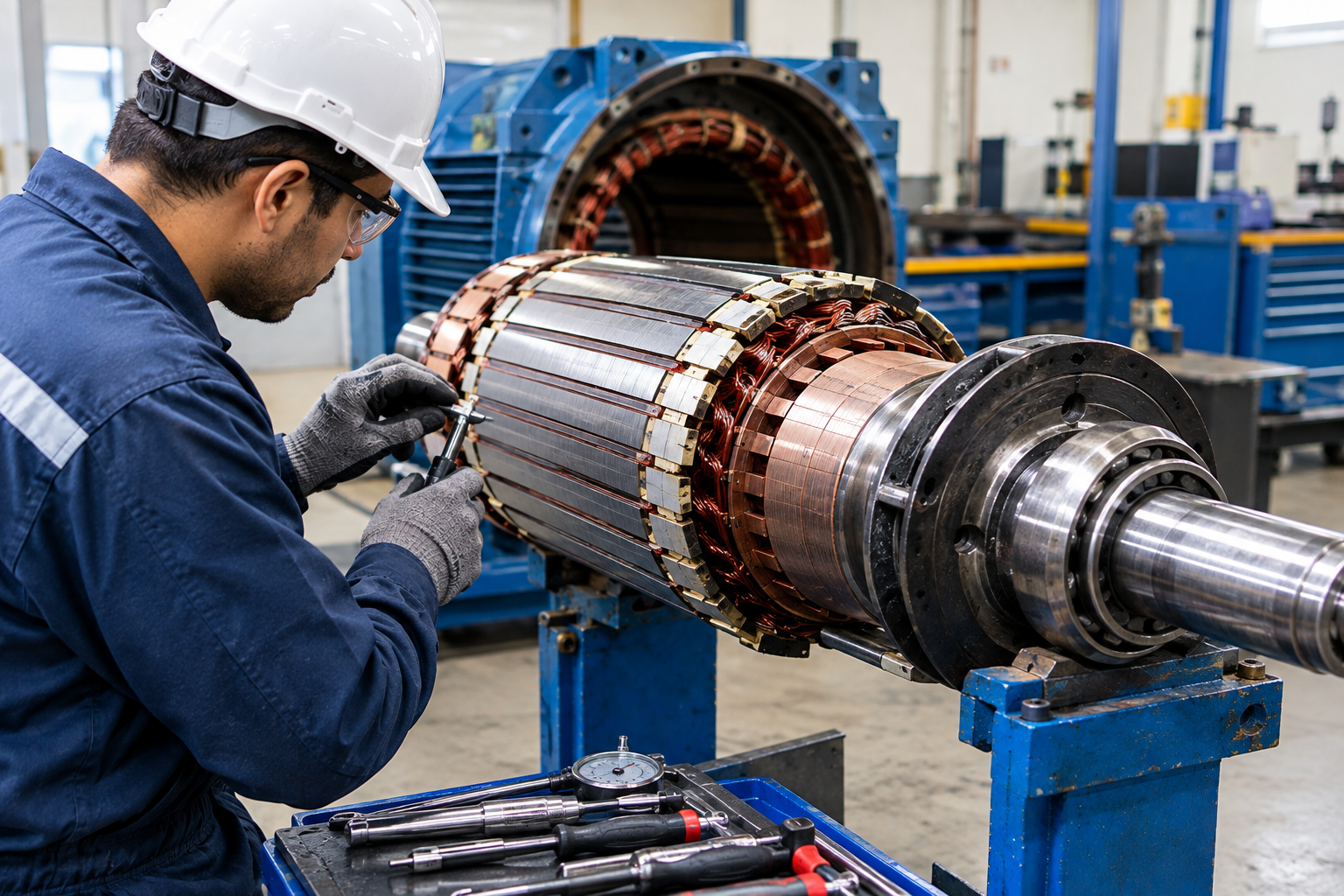
Rotor Repair Cost: What Affects Pricing, Repair vs. Replacement, and Service Options
Rotor problems can affect the performance, efficiency, and reliability of motors, generators, and other rotating electrical equipment. The final repair bill is rarely determined by one factor. Damage severity, rotor type, replacement parts, labor, testing, and the equipment’s overall condition can all affect the amount you pay.
For businesses that depend on generators or industrial motors, understanding the factors behind rotor repair cost makes it easier to review estimates and decide whether repairing an existing component is practical.
Understanding Rotor Repair Cost
Rotor repair pricing depends largely on the type and extent of damage. A rotor with minor surface damage may only require machining, balancing, or other corrective work. A severely damaged rotor may need rewinding, shaft repair, replacement of components, or extensive testing.
The equipment’s size also affects pricing. Small motor rotors generally require fewer resources than large industrial or generator rotors. Larger assemblies can require specialized lifting equipment, precision machining, additional technicians, and longer testing procedures.
The repair process may include:
- Initial inspection and fault diagnosis
- Disassembly and cleaning
- Shaft inspection
- Bearing-seat inspection
- Core and winding assessment
- Machining or surface restoration
- Dynamic balancing
- Rewinding where required
- Insulation testing
- Final assembly and performance testing
A written estimate should identify which of these services are required rather than providing only a single unexplained figure.
See also: Polycarbonate Rooflights for Flat Roofs: A Practical Guide to Light, Design and Installation
What Determines Rotor Replacement Price?
A rotor that cannot be economically repaired may need to be replaced. The rotor replacement price depends on the equipment manufacturer, rotor dimensions, material specifications, electrical characteristics, availability of the component, and whether an original or compatible replacement is being used.
Custom-built industrial rotors can cost considerably more than standard components because they may require engineering drawings, specialized materials, precision machining, and electrical testing.
Shipping and installation can also affect the total expense. A replacement rotor may need to be transported using specialized packaging or lifting equipment, particularly for large generators and industrial machinery.
Before approving a replacement, ask for a breakdown covering:
- Rotor or core price
- Transportation
- Installation labor
- Balancing
- Testing
- Removal of the damaged rotor
- Disposal or return of the old component
- Any additional machining or fitting
This provides a clearer picture of the actual project cost.
Rotor Replacement vs. Repair: Which Option Makes Sense?
Rotor replacement is not automatically the better choice after major damage. In some cases, an experienced repair facility can restore the existing rotor at a lower overall cost. In others, continued repairs may not make financial or operational sense.
Repair may be appropriate when the shaft, core, and other major components remain structurally sound. Replacement may be considered when the rotor has extensive mechanical damage, repeated failures, severe electrical deterioration, or obsolete components that are difficult to restore.
The decision should also consider downtime. A repair that takes several weeks may have a different financial impact from a replacement that can be sourced and installed sooner.
A useful comparison should consider the total cost of each option rather than only the workshop invoice.
How to Estimate Rotor Replacement Cost
Estimating rotor replacement cost requires more than knowing the equipment’s model number. Service providers may need rotor dimensions, shaft measurements, voltage, power rating, operating speed, manufacturer information, and photographs of the damaged component.
For large industrial equipment, the repair company may request inspection records or previous maintenance reports. These documents can reveal recurring problems and help technicians determine whether replacement is justified.
A reliable estimate should distinguish between confirmed costs and potential additional work. For example, a quotation may cover machining and balancing but exclude repairs discovered after disassembly.
Getting a detailed inspection before agreeing to major work can reduce unexpected charges later.
Finding Rotor Replacement Cost Near Me
Searching for rotor replacement costs near me can produce many local repair companies, but location alone should not determine which provider you choose. Experience with the specific type of motor or generator is more relevant.
Look for a facility that can demonstrate experience with comparable equipment and can explain its inspection and testing procedures. For industrial applications, ask whether the workshop has suitable machining, balancing, winding, and electrical testing capabilities.
You can also ask for:
- An inspection report
- A written quotation
- Estimated turnaround time
- Warranty terms
- Testing documentation
- Details of replacement materials
- References for similar projects
A local provider may reduce transportation time, but the technical capabilities of the workshop should remain a major consideration.
What to Expect From a Rotor Repair Shop
A professional rotor repair shop should begin with inspection rather than immediately recommending replacement. Technicians typically examine the rotor for cracks, wear, distortion, electrical damage, corrosion, and other faults.
Depending on the equipment, measurements may be taken before dismantling or machining begins. Shaft runout, bearing surfaces, core condition, winding condition, and balance may all require evaluation.
After repairs, testing helps confirm that the rotor meets the required specifications. Dynamic balancing is particularly relevant because even a relatively small imbalance can create vibration at operating speed.
Ask the workshop what testing will be performed and whether the results will be documented. This information can be useful for maintenance records and future troubleshooting.
How Generator Rotor Repair Is Priced
Generator rotor repair can involve more extensive work than repairs on smaller motors because of the size, operating speed, electrical design, and precision requirements of generator assemblies.
Damage may involve the shaft, retaining components, windings, insulation, pole structure, or other rotor parts. Technicians may need to perform specialized inspections before determining the appropriate repair procedure.
Generator repairs can also involve substantial downtime costs. For facilities that depend on continuous power generation, the financial impact of an extended outage may exceed the direct workshop expense.
For this reason, generator repair estimates should account for inspection, repair work, balancing, electrical testing, transportation, installation, and commissioning where applicable.
What Rotor Repair Services Usually Include
The exact scope of rotor repair services varies by equipment and damage, but many facilities provide several related capabilities under one project.
Common services include shaft repair, machining, rewinding, balancing, component replacement, insulation restoration, cleaning, and electrical testing.
Some workshops also handle rotor removal and installation. This can simplify the project because one provider manages several stages instead of coordinating separate contractors.
Before work begins, confirm exactly what the service includes. A quotation that covers only the workshop repair may not include removal, transportation, reinstallation, or final commissioning.
Common Rotor Problems That Affect Repair Pricing
Different failures require different repair procedures. Common rotor problems include shaft wear, bent shafts, cracked components, winding faults, damaged insulation, corrosion, excessive vibration, and imbalance.
Mechanical damage often requires machining or component replacement. Electrical problems may require rewinding or insulation work. Excessive vibration can require balancing and investigation of related bearings, couplings, or alignment issues.
Repeated failure deserves particular attention. Repairing the same symptom without identifying its underlying cause can lead to additional downtime and expenses.
Labor, Parts, Testing, and Other Repair Expenses
Labor can represent a significant portion of a repair invoice, particularly for large or specialized equipment. Technicians may spend considerable time dismantling, measuring, machining, rewinding, balancing, assembling, and testing the rotor.
Parts and materials vary according to the repair. Bearings, insulation materials, winding wire, retaining components, shaft material, and other specialized parts may be required.
Testing should also be considered. Electrical and mechanical tests provide evidence that the repaired rotor is suitable for service and can identify problems before the equipment returns to operation.
Transportation, crane services, storage, and emergency turnaround can add to the final invoice as well.
How to Compare Rotor Repair Quotes
Two quotations can differ substantially while both appear reasonable. The difference may come from the scope of work rather than the hourly labor rate.
Compare each quote based on:
- Inspection and diagnosis
- Repair procedures
- Replacement parts
- Machining
- Balancing
- Electrical testing
- Transportation
- Installation
- Warranty coverage
- Expected completion date
Ask the repair company to identify exclusions and possible additional charges. A lower initial quote may not remain lower if essential services are excluded.
Questions to Ask Before Approving Rotor Repairs
Before authorizing work, ask the technician what caused the failure, which components require repair, and whether replacement has been considered.
You can also ask:
- What tests were performed during inspection?
- Which repairs are essential?
- Which repairs are recommended but optional?
- Will the rotor be dynamically balanced?
- What testing will be completed after repair?
- What warranty is provided?
- How long is the expected turnaround?
- Could other components cause the same failure again?
Clear answers can help you understand what you are paying for and what condition the equipment should be in after the work is completed.
When Rotor Replacement May Be More Practical
Repair is not always the most economical route. A rotor with extensive structural damage, repeated failures, severe electrical deterioration, or difficult-to-source components may be better replaced.
The age and condition of the surrounding equipment also matter. Installing a new rotor in machinery with worn bearings, damaged stator components, or alignment problems may not solve the larger reliability issue.
A technical inspection can help determine whether repair, partial component replacement, or a complete replacement is appropriate.
How Proper Maintenance Can Reduce Repair Expenses
Regular inspections can identify wear and abnormal vibration before they develop into major failures. Monitoring temperature, vibration, electrical performance, and bearing condition can provide useful warning signs.
Keeping accurate maintenance records also helps technicians identify recurring faults. Correct alignment, appropriate lubrication, clean operating conditions, and scheduled inspections can reduce unnecessary stress on rotating components.
Rotor maintenance is particularly important for equipment operating continuously or under heavy loads. Early intervention can sometimes prevent extensive damage and reduce unplanned downtime.
A repair estimate should therefore be viewed alongside the condition of the complete machine. The cheapest immediate repair is not necessarily the lowest-cost option over the equipment’s remaining service life.