How Commercial Snow Removal Helps Keep Businesses Accessible
Winter weather can create significant challenges for commercial properties, particularly when heavy snowfall accumulates around entrances, parking areas, walkways, loading zones, and other frequently used spaces. For businesses that need to remain accessible during winter conditions, timely snow management is an important part of property maintenance. Commercial snow removal helps clear accumulated snow from key areas so employees, customers, visitors, and delivery personnel can move around the property more easily.
A well-planned approach to snow removal can also support daily operations, reduce disruptions, and help businesses prepare for changing winter conditions. Understanding how snow removal contributes to accessibility can help property owners and managers develop practical winter maintenance plans.
Why Snow Can Affect Business Accessibility
Snow can accumulate quickly during a winter storm. Even moderate snowfall can create obstacles when it is not cleared promptly, while heavier accumulation can make entrances and outdoor areas difficult to use.
See also: Carpet Cleaning for Commercial Spaces: A Practical Guide to Cleaner Workplaces
Snow Can Block Key Access Points
Entrances, emergency exits, pedestrian paths, and parking areas can become obstructed when snow accumulates. Drifts created by wind may make some areas particularly difficult to access.
Keeping these locations clear allows people to reach the building without having to navigate unnecessary obstacles.
Snow Can Change Walking Conditions
Compacted snow can become uneven as people walk over it repeatedly. Changes in temperature can also cause snow to melt and refreeze, creating icy patches.
Clearing snow before it becomes heavily compacted can make ongoing winter maintenance easier and help maintain more usable walking routes.
Keeping Parking Areas Accessible
Parking areas are often one of the first parts of a commercial property affected by significant snowfall. Vehicles need sufficient space to enter, park, turn, and leave safely.
Clearing Driving Lanes
Accumulated snow can narrow driving lanes and make vehicle movement more difficult. Snow piles can also reduce available space around intersections and turning areas.
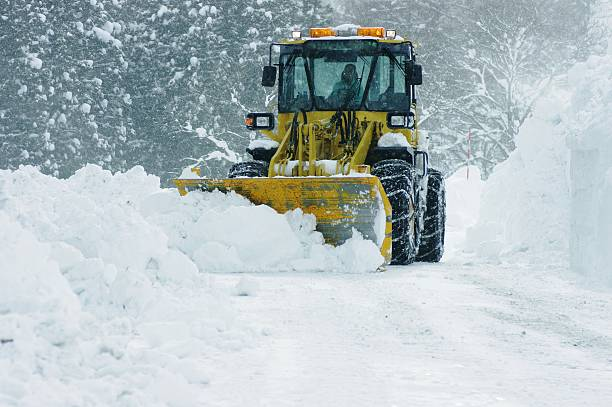
Regular clearing helps maintain usable routes throughout the parking area. Depending on the property’s size and layout, snow may need to be moved to designated storage areas rather than simply pushed toward traffic lanes.
Maintaining Parking Spaces
Snow accumulation can reduce the number of usable parking spaces. This can become a problem for businesses with limited parking capacity.
Planned snow removal can help recover parking space after a significant snowfall and maintain access for employees and visitors.
Keeping Accessible Parking Areas Clear
Designated accessible parking spaces and their connecting routes require particular attention. Snow should not be pushed into these spaces or onto access paths.
Maintaining clear routes between parking areas and building entrances can make it easier for people with different mobility needs to access the property.
Maintaining Clear Walkways and Entrances
Pedestrian access is another important consideration during winter weather. Employees, customers, and visitors often depend on clearly maintained walkways to reach entrances.
Clearing Primary Walkways
Primary pedestrian routes should be identified before winter conditions occur. These may include sidewalks, paths between parking areas and entrances, and routes connecting different parts of a property.
Prioritising these areas can help ensure that the most frequently used paths remain accessible.
Keeping Doorways Clear
Snow can accumulate around doors and entryways, particularly where wind creates drifts. Excess snow can interfere with movement around the entrance and may make doors more difficult to use.
Keeping the area immediately around entrances clear is therefore an important part of winter property maintenance.
Supporting Daily Business Operations
Snow removal is not only about physical access. It can also help businesses maintain normal activities during periods of winter weather.
Helping Employees Reach the Workplace
Employees need reliable access to their workplace. Parking lots, sidewalks, and building entrances that are covered with snow can create delays and make it more difficult for staff to arrive and enter the property.
A timely clearing plan helps businesses prepare these areas for regular use.
Supporting Customer Access
Customers may avoid or leave a property if parking and pedestrian routes are difficult to navigate. Clear access points can make it easier for customers to enter and move around the property during winter conditions.
For businesses that rely on regular in-person visits, maintaining accessible exterior areas can be an important part of operational continuity.
Supporting Deliveries and Service Vehicles
Commercial properties may receive deliveries throughout the winter. Loading zones, service entrances, and access roads need sufficient clearance for vehicles to reach the appropriate areas.
Snow management plans should account for these operational requirements rather than focusing only on customer-facing spaces.
Reducing Disruptions After Snowstorms
Winter storms can interrupt normal business activities when snow is allowed to accumulate for extended periods.
Establishing Priority Areas
Not every part of a property needs to be cleared at exactly the same time. Property managers can establish priorities based on how areas are used.
High-priority locations may include:
- Main entrances
- Emergency exits
- Primary walkways
- Parking entrances and exits
- Accessible parking spaces
- Loading zones
- Fire access routes
- Frequently used service areas
Prioritising these locations can help make the property functional more quickly after snowfall.
Monitoring Conditions
Snow removal is not necessarily a one-time task. Continued snowfall, wind, and temperature changes can create new accumulations after an initial clearing.
Regular monitoring allows property managers to determine when additional clearing is necessary.
The Importance of Proper Snow Storage
Where removed snow is placed can affect accessibility just as much as how it is removed.
Avoiding Obstructions
Large snow piles should not block entrances, visibility areas, pedestrian paths, drainage points, or parking spaces.
Snow should be moved to locations that do not interfere with normal property operations.
Considering Drainage
When temperatures rise, stored snow eventually melts. If snow is placed near drainage points or in locations where meltwater can collect, it may contribute to standing water or refreezing.
Planning snow storage locations in advance can help reduce these problems.
Snow Removal and Winter Safety
Accessibility and safety are closely connected. People may have difficulty maintaining their balance on uneven or slippery surfaces, particularly where snow has been compacted.
Addressing Ice Formation
Snow removal alone may not eliminate winter hazards. Meltwater can refreeze when temperatures fall, creating icy areas.
For this reason, winter maintenance may involve monitoring surfaces after snow has been cleared and addressing changing conditions as necessary.
Maintaining Consistent Routes
A property is easier to navigate when people can use predictable, clearly maintained routes. Creating designated pedestrian paths can help direct foot traffic away from areas where vehicles are moving.
Consistent maintenance also makes it easier for property managers to identify locations that require additional attention.
Planning Commercial Snow Removal in Advance
Effective winter maintenance begins before the first major snowfall. Property owners and managers can review the layout and identify areas that are most important for daily operations.
Assessing Property Needs
The size and design of a commercial property influence its snow removal requirements. A small office may primarily need entrances and walkways cleared, while a large commercial facility may require extensive parking lots, access roads, loading areas, and pedestrian routes to be maintained.
Establishing a Response Plan
A winter maintenance plan can define which areas should be cleared first, where snow can be stored, and how changing weather conditions will be monitored.
Planning ahead can reduce confusion during severe weather and help ensure that important access routes are addressed promptly.
Conclusion
Snow can quickly affect the accessibility and operation of a commercial property. Accumulated snow may restrict parking, block entrances, narrow driving lanes, obstruct walkways, and make deliveries more difficult. Timely commercial snow removal helps address these challenges by keeping important areas clear and usable during winter weather.
An effective approach should consider more than simply removing snow from the most visible areas. Parking spaces, pedestrian routes, accessible parking, loading zones, emergency access routes, entrances, and appropriate snow storage locations all require attention.
By identifying priority areas, monitoring changing conditions, and preparing a practical winter maintenance plan, businesses can make it easier for employees, customers, visitors, and service personnel to access the property throughout the winter season.