
Carpet Cleaning for Commercial Spaces: A Practical Guide to Cleaner Workplaces
Clean carpets affect more than the appearance of an office, retail store, medical facility, or other commercial property. Regular maintenance helps manage dirt, dust, stains, and everyday wear while keeping shared spaces presentable for employees, customers, and visitors.
Commercial carpet maintenance also differs from residential cleaning. Larger floor areas, heavier foot traffic, business hours, furniture, and specific carpet materials can all affect the cleaning schedule and methods required. Understanding these factors makes it easier for property managers and business owners to plan suitable maintenance.
Why Commercial Carpets Need Regular Cleaning
Carpets in business premises can collect dirt quickly. Employees and visitors bring soil, dust, moisture, and other debris into the building throughout the day. Some particles settle beneath the carpet surface, while others become embedded in the fibres through repeated foot traffic.
Routine carpet cleaning commercials can help businesses maintain cleaner-looking interiors and reduce the buildup associated with heavy daily use. Cleaning frequency depends on the type of property, number of occupants, carpet material, and traffic levels.
High-traffic entrances, corridors, reception areas, and break rooms generally require more attention than offices with limited foot traffic. A maintenance plan can focus cleaning resources on these areas without treating every part of the building in exactly the same way.
See also: How to Turn an Unused Backyard Area Into a Gazebo Retreat
What Commercial Carpet Cleaning Involves
Professional carpet maintenance can include several stages. The process commonly begins with an inspection of the carpet to identify stains, worn sections, fibre characteristics, and areas requiring additional treatment.
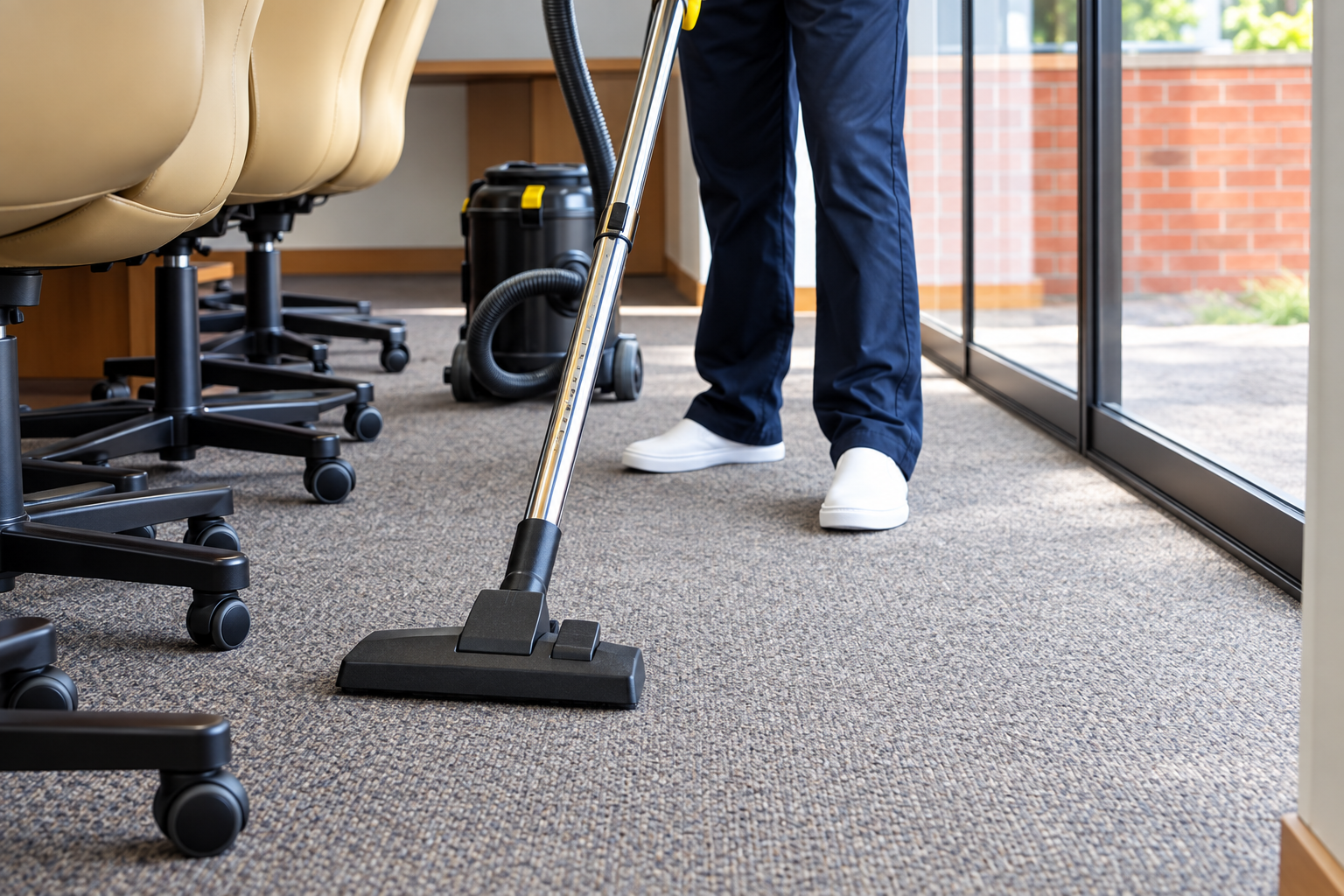
Vacuuming removes loose dirt and debris before deeper cleaning begins. Depending on the carpet and site conditions, professionals may then use hot water extraction, low-moisture cleaning, encapsulation, or other suitable methods.
Spot treatment may be used for coffee, food, grease, mud, ink, and other common commercial stains. The appropriate treatment depends on the substance involved and the carpet’s construction.
Drying also deserves attention. Excess moisture left in carpet can create unpleasant odours and may interfere with normal business activities. Professional cleaners typically consider ventilation, equipment, carpet thickness, and cleaning method when managing drying time.
Choosing Commercial Carpet Cleaning Companies
Businesses often compare commercial carpet cleaning companies based on factors beyond price. Experience with commercial properties, available equipment, cleaning methods, scheduling flexibility, insurance, and customer reviews can all provide useful information.
A company working in an office building may need to accommodate employees and visitors during normal operating hours. A retail business may require cleaning after closing, while a medical facility may have additional hygiene requirements.
Ask prospective providers about their cleaning process, expected drying time, stain treatment, equipment, and maintenance recommendations. Clear answers can help avoid misunderstandings after the work begins.
Cleaning Requirements in Houston Businesses
Businesses searching for commercial carpet cleaning services Houston TX may need to consider local conditions as part of their maintenance planning. Humidity, rain, outdoor debris, and high levels of foot traffic can contribute to carpet soiling.
Entrances and areas near exterior doors can collect more dirt during wet weather. Placing suitable entrance mats and maintaining them regularly can reduce the amount of soil transferred onto carpet.
A cleaning schedule should also reflect the type of business. A small professional office may require less frequent deep cleaning than a busy hospitality, retail, or healthcare environment.
How Often Should Commercial Carpets Be Cleaned?
There is no single schedule suitable for every commercial property. A practical starting point is to assess traffic and divide the building into high-, medium-, and low-use areas.
High-traffic sections may need professional attention several times a year, while lower-use areas may require less frequent deep cleaning. Regular vacuuming between professional visits is equally useful because it removes loose particles before they become embedded.
Businesses should also consider seasonal changes, special events, construction work, spills, and changes in occupancy. These situations can justify additional cleaning outside the normal schedule.
Signs Your Carpet Needs Professional Attention
Several visible and practical signs can indicate that routine maintenance is no longer enough:
- Persistent stains remain after normal spot cleaning.
- High-traffic paths appear darker than the surrounding carpet.
- The carpet develops noticeable odours.
- Dust and debris accumulate quickly after vacuuming.
- Fibres look flattened or heavily worn.
- Employees or visitors frequently track soil into the building.
- Carpet appearance has declined despite regular vacuuming.
Addressing these signs early can help prevent heavily soiled areas from becoming harder to maintain.
Comparing Cleaning Methods
Different carpet materials and building conditions call for different cleaning techniques. Hot water extraction can provide deep cleaning but may require additional drying time. Low-moisture methods can be useful when a business needs the carpet ready for use relatively quickly.
Encapsulation cleaning uses a cleaning product that surrounds soil particles so they can be removed through subsequent vacuuming. Other methods may be appropriate for particular fibres or heavily used areas.
A professional assessment can help determine which method suits the carpet rather than relying on a single technique for every property.
What to Ask Before Hiring a Cleaning Provider
Before selecting the best commercial carpet cleaning company, business owners can compare providers using practical criteria rather than relying solely on promotional claims.
Consider asking:
- How much experience do you have with commercial properties?
- Which cleaning methods do you use?
- How do you handle difficult stains?
- How long will the carpet need to dry?
- Do you work outside regular business hours?
- Are your technicians trained for different carpet materials?
- Do you carry appropriate insurance?
- Can you provide references or recent customer feedback?
- Do you offer recurring maintenance plans?
- What preparation is required before cleaning?
These questions can reveal differences between providers that may not be obvious from an initial quote.
Maintaining Carpet Between Professional Visits
Professional cleaning works best alongside consistent daily maintenance. Employees responsible for building upkeep should vacuum busy areas regularly and respond to spills promptly.
Entrance mats can capture soil before it reaches the carpet. Furniture should also be moved carefully to prevent unnecessary fibre damage. Spills should be blotted rather than aggressively rubbed, since rubbing can spread the substance or push it deeper into the carpet.
A written maintenance schedule can help staff track vacuuming, spot treatment, inspections, and professional cleaning dates.
Planning a Commercial Carpet Maintenance Schedule
A well-planned schedule considers the building’s traffic patterns, carpet type, operating hours, and cleaning budget. Instead of waiting until carpets look heavily soiled, businesses can establish routine inspections and address problem areas earlier.
The right best commercial carpet cleaning service should fit the property’s actual requirements, including scheduling, cleaning methods, drying expectations, and ongoing maintenance needs.
For business owners and facility managers, carpet care is largely a matter of consistent maintenance. Regular vacuuming, timely stain treatment, professional deep cleaning, and sensible scheduling can help commercial carpets remain cleaner and more presentable throughout their service life.